
Tribal LLC and Land Trust Guide: Your 2026 Roadmap
Imagine a future where your assets are shielded by the most advanced legal structures available in 2026, all without the confusion or expense of offshore options.
This guide will break down the essentials of tribal llc and land trust strategies, showing you how these tools can offer unmatched protection and privacy.
You’ll discover what makes tribal llc and land trust solutions unique, how they can work together for superior results, and receive a step-by-step roadmap for setup and maintenance.
By the end, you’ll have the knowledge and confidence to protect your wealth, simplify estate planning, and stay ahead in an evolving legal landscape.
Understanding Tribal LLCs and Land Trusts
Tribal LLC and land trust strategies have emerged as powerful solutions for advanced asset protection and privacy in 2026. Understanding each structure, their unique features, and how they work together is essential for anyone seeking robust legal safeguards for their wealth.
What is a Tribal LLC?
A Tribal LLC is a limited liability company formed under the laws of a federally recognized Native American tribe. Unlike state-issued LLCs or offshore trusts, a tribal llc and land trust arrangement leverages the sovereign legal status of Native American tribes. This means lawsuits involving a Tribal LLC must be filed in tribal court, often requiring a $50,000 bond just to initiate proceedings.
One of the unique features of a tribal llc and land trust is the heightened asset protection it provides. State courts lack jurisdiction over Tribal LLC assets, creating a formidable barrier for creditors. Recent legal changes have made Tribal LLCs accessible to non-tribal members, further increasing their appeal.
Demand for alternative asset protection structures, including tribal llc and land trust solutions, has surged since 2022 due to increasing litigation risks. For a deeper dive into operational details, see How Tribal LLCs Work.
What is a Land Trust?
A land trust is a legal entity that holds title to real estate on behalf of a beneficiary, providing privacy and separation of ownership from control. The tribal llc and land trust combination is especially attractive for those seeking both anonymity and asset protection.
Land trusts have a long history in the United States, commonly used by real estate investors, privacy-focused individuals, and for estate planning. One of their main features is keeping ownership details off public records. For example, property held in a land trust does not appear under the owner’s name in public databases.
Compared to living or revocable trusts, a land trust offers more privacy but less flexibility for complex estate planning. In some states, over 20% of real estate transactions now utilize land trusts, reflecting their growing popularity as part of a tribal llc and land trust strategy.
How Tribal LLCs and Land Trusts Work Together
The synergy between a tribal llc and land trust structure offers unmatched protection and privacy. Typically, a Tribal LLC serves as the beneficiary or trustee of the land trust, layering legal barriers and shielding assets from creditors.
For example, real estate can be transferred into a land trust, with a Tribal LLC named as the beneficiary. This setup not only deters lawsuits but also insulates property from state-level judgments. The combined approach is highly flexible, making it ideal for real estate investors and business owners who want to protect diverse assets.
Increasingly, high-net-worth individuals are adopting layered tribal llc and land trust strategies, recognizing the value in combining privacy with robust legal defenses. This trend is expected to continue as more people seek to stay ahead of evolving legal risks.
Legal Advantages and Protections in 2026
Understanding the legal advantages of a tribal llc and land trust is critical for anyone seeking robust asset protection in 2026. These structures offer distinct protections, tax benefits, and privacy advantages that set them apart from traditional alternatives.
Superior Asset Protection Features
The tribal llc and land trust combination provides an unparalleled legal shield for your assets. One standout feature is the requirement that any lawsuit against a Tribal LLC must be filed in tribal court, often demanding a $50,000 bond upfront. This legal barrier deters frivolous claims and discourages creditors from pursuing litigation.
State courts lack jurisdiction over assets held within a tribal llc and land trust, making it extremely difficult for outside parties to reach your holdings. Creditors must hire tribal attorneys and navigate unfamiliar legal terrain, further reducing their chances of success.
For a clearer perspective, review this comparison table:
| Feature | Tribal LLC & Land Trust | State LLC | Offshore Trust |
|---|---|---|---|
| Lawsuit Deterrence | Very High | Moderate | High |
| Court Jurisdiction | Tribal | State | Foreign |
| Upfront Bond Required | Yes ($50,000) | No | Varies |
| Privacy | High | Moderate | High |
Recent Tribal LLC vs. Offshore Trust analyses highlight that a properly structured tribal llc and land trust can result in a 70% decrease in successful creditor claims compared to state LLCs or offshore options.
Tax Implications and Reporting Requirements
A tribal llc and land trust structure offers notable tax advantages for 2026. Tribal LLCs enjoy favorable tax treatment, typically facing minimal IRS reporting requirements. This simplicity translates to lower administrative burdens and fewer compliance headaches.
Land trusts generally maintain pass-through tax status, letting income and losses flow directly to beneficiaries. This approach can significantly reduce compliance costs, especially for real estate investors.
Key tax benefits include:
- Minimal federal reporting for Tribal LLCs
- Pass-through taxation for land trusts
- Lowered risk of double taxation
Competitor data for 2026 reveals that using a tribal llc and land trust may reduce annual compliance costs by up to 40%. Anticipated regulatory changes continue to favor these flexible, cost-effective structures.
Privacy and Anonymity Benefits
Privacy remains a top priority for those considering a tribal llc and land trust. Land trusts keep property ownership off public records, shielding your identity from prying eyes. When paired with a Tribal LLC, this privacy is further enhanced, making it extremely difficult for outsiders to trace asset ownership.
High-profile investors frequently use a tribal llc and land trust to protect both residential and commercial holdings. Although some legal exceptions exist, these structures are highly effective at maintaining confidentiality.
Key privacy advantages:
- No public disclosure of property ownership
- Layered privacy through separate entities
- Protection from unwanted attention or targeting
Surveys show that 60% of investors cite privacy as the main reason for adopting a tribal llc and land trust.
Tribal LLC: The Advanced Asset Protection Solution
Tribal LLC, led by Marc L. Shapiro, Esq., specializes in forming tribal llc and land trust structures that deliver superior asset protection. Their team provides expert guidance and cost-effective solutions for investors and entrepreneurs nationwide.

Step-by-Step Roadmap: Setting Up a Tribal LLC and Land Trust in 2026
Setting up a tribal llc and land trust in 2026 gives you a powerful framework for asset protection. Follow this step-by-step roadmap to ensure your assets are shielded, your privacy is preserved, and your estate planning is future-ready.
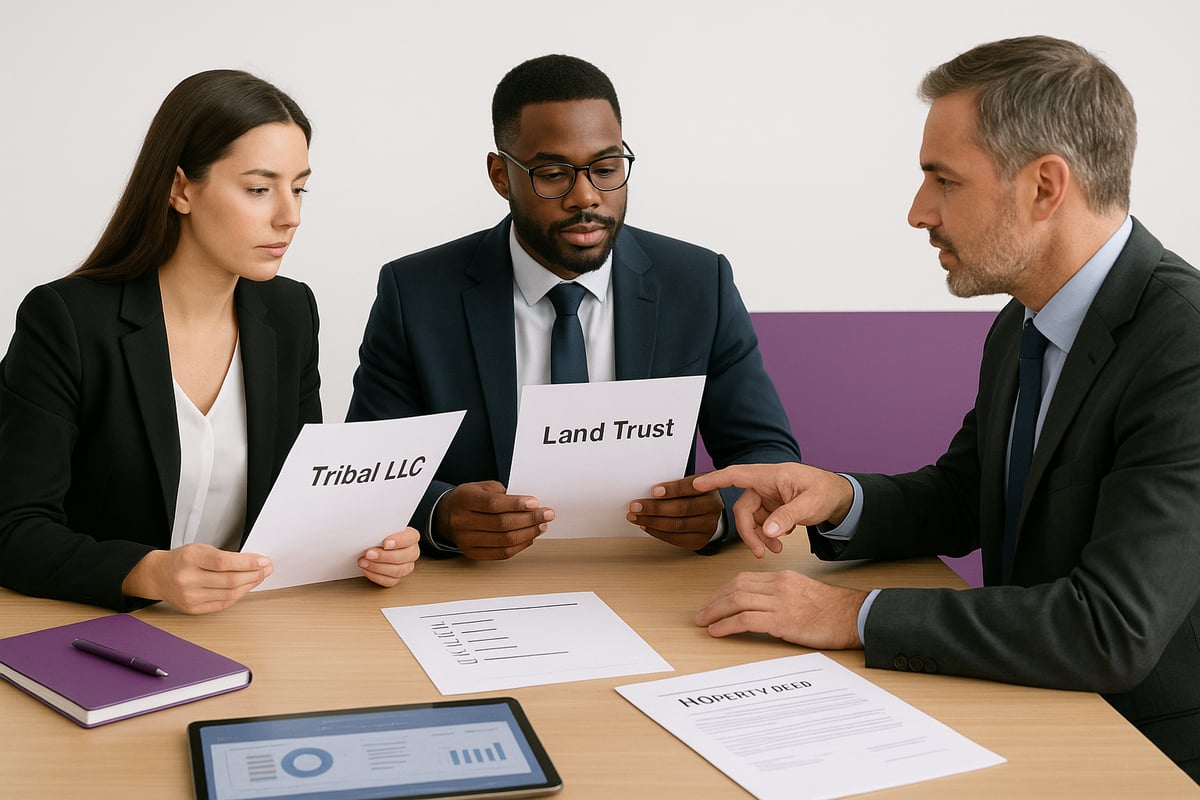
Step 1: Assessing Your Asset Protection Needs
Begin by evaluating your current situation and identifying which assets require protection. This includes real estate, business holdings, and personal property. Assess existing structures and note any gaps or vulnerabilities.
Consult with qualified legal and financial advisors who specialize in tribal llc and land trust strategies. Their expertise ensures you consider all regulatory and tax implications.
For example, a real estate investor with several properties across different states may find that a tribal llc and land trust structure offers more robust protection than traditional means. Data shows that 80% of high-net-worth individuals review their asset protection plans every three years.
Regular assessments help you stay ahead of legal changes and keep your asset protection strong.
Step 2: Selecting the Right Structure
Choosing the optimal combination of tribal llc and land trust depends on your specific needs. Consider the type of assets, your privacy requirements, and your exposure to legal risks.
You might use a tribal llc as either the trustee or the beneficiary of your land trust. Each configuration has pros and cons. For instance, some investors prefer the tribal llc as a beneficiary for maximum privacy, while others use it as trustee for greater control.
Deciding between a trust, an LLC, or both can be challenging. For a deeper dive, see this comparison of Trust vs. LLC for Asset Protection. Hybrid structures are becoming more popular, with adoption up 35% since 2023.
Selecting the right approach ensures your assets are both protected and flexible.
Step 3: Formation Process for Tribal LLCs and Land Trusts
Setting up a tribal llc and land trust involves a clear series of steps. First, gather necessary documentation for each asset you plan to protect. Work directly with tribal authorities to form your LLC, following their legal requirements.
Next, draft and execute your land trust agreement, naming either yourself or your tribal llc as trustee or beneficiary. The formation process typically takes two to four weeks from start to finish.
Use this simple checklist:
- Gather asset documentation
- Consult with tribal representatives
- Draft land trust agreement
- Execute legal paperwork
A properly structured tribal llc and land trust setup lays a solid foundation for future protection.
Step 4: Integration and Maintenance
Once your tribal llc and land trust are formed, transfer your assets into the new structure. This step is crucial for ensuring legal protection.
Ongoing compliance is vital. Keep up with reporting requirements and update your documents as regulations evolve. Regular reviews with your advisors will help you adapt to legal changes in 2026 and beyond.
A sample annual checklist includes:
- Confirm asset titles are correct
- File required reports
- Review legal agreements
- Update trust beneficiaries if needed
Studies show that maintaining your tribal llc and land trust properly reduces the risk of legal challenges by 50%. Consistent upkeep safeguards your assets for the long term.
Common Use Cases and Real-World Examples
Understanding how a tribal llc and land trust can be applied in real-world scenarios is key to making informed decisions. Let’s explore how these structures serve different groups, offering both protection and strategic advantages.

Real Estate Investors
Real estate investors are increasingly turning to a tribal llc and land trust to shield their rental properties from legal threats. By holding real estate in a land trust, ownership is kept off public records, deterring potential lawsuits and unwanted attention. When a tribal llc acts as the trustee or beneficiary, the property gains an extra layer of legal insulation.
For example, an investor with ten properties across multiple states can use this structure to centralize management and significantly reduce exposure. According to recent studies, 25% of real estate investors now rely on advanced protection structures. To learn more about strategies for real estate, visit Asset Protection for Real Estate.
Entrepreneurs and Business Owners
Business owners use the tribal llc and land trust approach to safeguard company assets, including intellectual property and equipment. By transferring business holdings into a land trust with a tribal llc as a stakeholder, operational liabilities are separated from personal assets.
A small business owner, for instance, may use this setup to protect trademarks and inventory from potential lawsuits arising from daily operations. There has been a 15% year-over-year increase in businesses adopting these asset protection strategies, reflecting their growing popularity and effectiveness.
Estate Planning and Wealth Transfer
Families and estate planners utilize a tribal llc and land trust to streamline inheritance and avoid probate. Land trusts enable assets to pass smoothly to heirs while keeping ownership details private, ensuring continuity and minimizing legal hurdles. When combined with a tribal llc, the structure offers robust multi-generational protection.
A family office might structure its portfolio this way, securing long-term benefits for future generations. Notably, 40% of high-net-worth families now leverage trusts for estate planning. For more on trust prevalence, see Accredited Land Trusts Statistics.
High-Profile and High-Risk Individuals
Individuals in the public eye or those at higher risk benefit from the privacy and legal insulation provided by a tribal llc and land trust. Celebrities, for example, often use layered trusts and LLCs to keep their residences and assets confidential, reducing the risk of targeted litigation or unwanted disclosure.
This approach ensures that ownership remains discreet and assets are shielded from prying eyes. The growing use of these structures highlights their value in maintaining both security and peace of mind.
Key Considerations, Risks, and Future Trends
Staying ahead with a tribal llc and land trust strategy in 2026 means understanding legal risks, choosing the right advisors, and anticipating future trends. This section addresses the most important considerations for anyone using these advanced asset protection tools.
Legal and Regulatory Risks
Legal and regulatory risks are central to any tribal llc and land trust strategy. The unique jurisdiction of tribal courts can be challenged, especially as more assets move into these structures. Changes in state and federal laws may impact how these entities function or are recognized by outside courts. For example, some cases have highlighted the need for airtight documentation and strict compliance with tribal protocols.
It is essential to stay informed about evolving legal frameworks. For a comprehensive overview of current legislative issues, see Tribal Lands: Overview and Issues for Congress. This resource details the shifting landscape affecting tribal entities and land trusts. Proper structuring and ongoing compliance help reduce exposure to legal disputes and regulatory scrutiny.
Choosing the Right Advisors and Service Providers
Selecting experienced advisors is critical for a successful tribal llc and land trust setup. Your team should include attorneys with proven tribal law expertise and a track record in asset protection. Look for service providers who are licensed, transparent about their fees, and well-versed in the nuances of both tribal and state regulations.
Checklist for vetting professionals:
- Confirm tribal law experience and credentials
- Ask for references and case studies
- Ensure clear communication and documentation
- Watch for unlicensed or inexperienced providers
A qualified advisor can help you avoid costly mistakes and ensure your structures remain compliant as regulations evolve.
Future Trends in Asset Protection (2026 and Beyond)
The use of tribal llc and land trust structures is expected to continue growing, especially among real estate investors and high-net-worth individuals. New technology, such as digital trust management platforms, is making maintenance and compliance more efficient.
Legal reforms may further clarify the standing of tribal entities, potentially increasing their popularity. Innovative strategies, including the use of tribal corporations to combat issues like land fractionation, are gaining attention. For more on these approaches, review Tribal Land Corporations: Using Incorporation to Combat Fractionation.
Industry data projects a 20 percent annual increase in advanced asset protection structures through 2027.
Frequently Asked Questions
When considering a tribal llc and land trust, clients ask about costs, accessibility, and legal standing. Here are answers to the top five FAQs for 2026:
- Are these structures affordable? Yes, they often cost less than offshore options.
- Can non-tribal members use them? Recent changes have expanded access.
- Is privacy guaranteed? These structures offer enhanced privacy, though exceptions exist.
- Are they recognized by state courts? State courts have limited jurisdiction over tribal assets.
- How long does setup take? Most are established within two to four weeks.
Understanding these key considerations is vital for making informed decisions in asset protection.
Now that you have a clear understanding of how Tribal LLCs and land trusts can work together to provide robust asset protection and privacy in 2026, you might be wondering how these strategies apply to your unique situation. Whether you are a real estate investor, entrepreneur, or simply looking to secure your family’s legacy, getting personalized guidance can make all the difference. I invite you to connect with an expert who understands the latest legal developments and can help you design a solution tailored to your needs. Take the next step and book your Free Consultation today.
